
The sandbar shark (Carcharhinus plumbeus) is one of the most widespread large coastal sharks across the world’s subtropical and temperate waters. Despite their abundance, they remain one of the most misidentified species among divers. At a glance, sandbars resemble silky sharks, juvenile Galapagos sharks, or even small dusky sharks, but subtle differences in body structure, fin placement, and swimming behavior set them apart.
Understanding these details not only improves identification skills but also helps visitors know what to expect during shark-diving tours in places like Hawaii, the U.S. East Coast, and the Red Sea – regions where sandbar sharks thrive in both shallow and deep-water environments.
Oversized, Upright Dorsal Fin – A Key Identification Trait
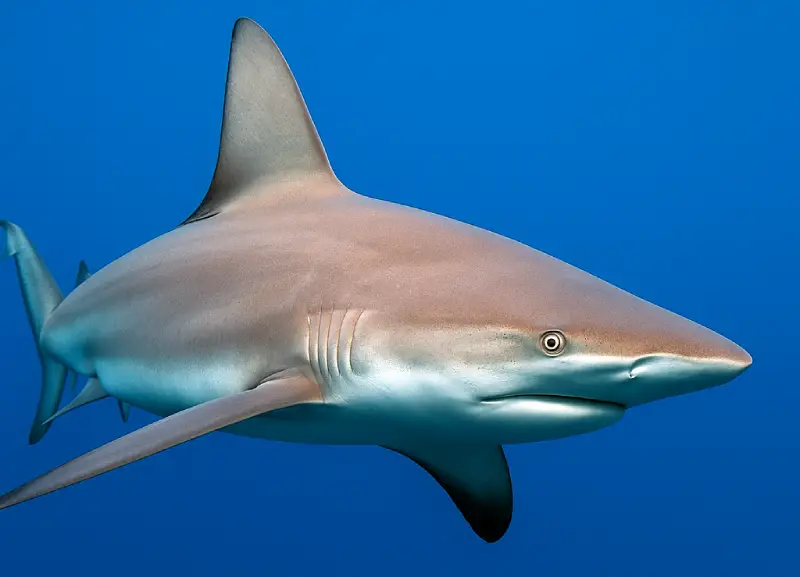
One of the easiest ways to identify a sandbar shark is by its oversized, upright first dorsal fin. It’s tall, sharply triangular, and positioned farther forward on the body than in many similar species. The base is notably broad, giving the shark a strong, grounded profile in the water. Among requiem sharks, the sandbar’s dorsal fin appears almost disproportionately large – an adaptation that provides excellent stability in strong currents and along sandy drop-offs. This distinctive feature makes the species recognizable even from the surface or in lower visibility conditions.
In comparison, silky sharks have a more curved, swept-back dorsal fin, Galapagos sharks are bulkier but have narrower dorsal bases, and dusky sharks have a dorsal positioned farther back. These subtle differences help divers and tour operators confidently identify sandbar sharks during blue-water encounters.
Thick, Stocky Body Built for Short Bursts of Power
While not the longest sharks in their family, sandbars appear solid and muscular. Their typical adult size ranges between 1.5–2.2 m (5–7.2 ft) in length and up to 90 kg (200 lbs) in weight.
Compared to reef sharks, sandbars have a broader head, a deeper chest, more pronounced pectorals, a shorter, more compact tail stock. This shape allows them to conserve energy while patrolling their sandy territories and makes them strong but controlled swimmers – ideal for divers because the species rarely darts aggressively unless chasing prey.
Natural Preference for Sandy, Coastal Environments
Sandbar sharks naturally gravitate toward sandy-bottom coastal environments, which include bays, shallow channels, harbors, continental shelf edges, soft-bottom lagoons, and isolated sandy ledges near coral reefs. These habitats offer ideal conditions – shelter for juveniles, reliable food sources such as mollusks, rays, and small bony fish, and steady currents that help concentrate prey. This is why sandbar sharks are often seen close to shore in places like Oahu’s North Shore, where deep-water drop-offs transition rapidly from harbor areas to the open ocean.
Unique expert insight:
Sandbars use sandy-bottom zones as both feeding corridors and resting territories, often cycling between deep and shallow waters throughout the day. Their site fidelity is one reason shark tours can rely on consistent sightings.
Calm, Predictable, and Methodical Swimming Patterns
Sandbar sharks are known for their calm, predictable, and methodical swimming behavior, making them one of the most structured movers among coastal shark species. They typically maintain a steady, moderate pace and often travel in wide circles or repetitive loops while keeping consistent spacing from one another. Erratic movements are rare unless they are actively pursuing prey.
These traits make sandbar sharks ideal subjects for shark diving, snorkeling, photography, videography, and research tagging. Divers frequently describe them as measured and deliberate – qualities that minimize sudden surprises and contribute to their reputation as a safe, reliable species for responsible diving encounters.
What this means for visitors:
On no-cage dives, sandbars will often approach to inspect divers but stop at a comfortable distance, maintaining a calm presence without high-speed passes.
Stable Populations and Large Aggregations in Protected Areas
Sandbar sharks show strong population stability in regions with long-term marine protections, often forming aggregations of:
- 20–50 individuals, occasionally more
These groupings occur for reasons such as:
- Seasonal mating
- Abundant food supply
- Safe nursery grounds
- Protection from predators (primarily tiger sharks)
Some regions with consistent aggregations include:
- Hawaii (North Shore)
- Japan’s Ogasawara Islands
- Select Red Sea marine parks
- U.S. East Coast offshore ledges
Unique observation from scientific fieldwork:
In many areas, sandbar sharks have strong site fidelity – returning to the same region year after year. This predictability makes them one of the most reliable species for eco-tourism and Shark ID citizen science projects.